
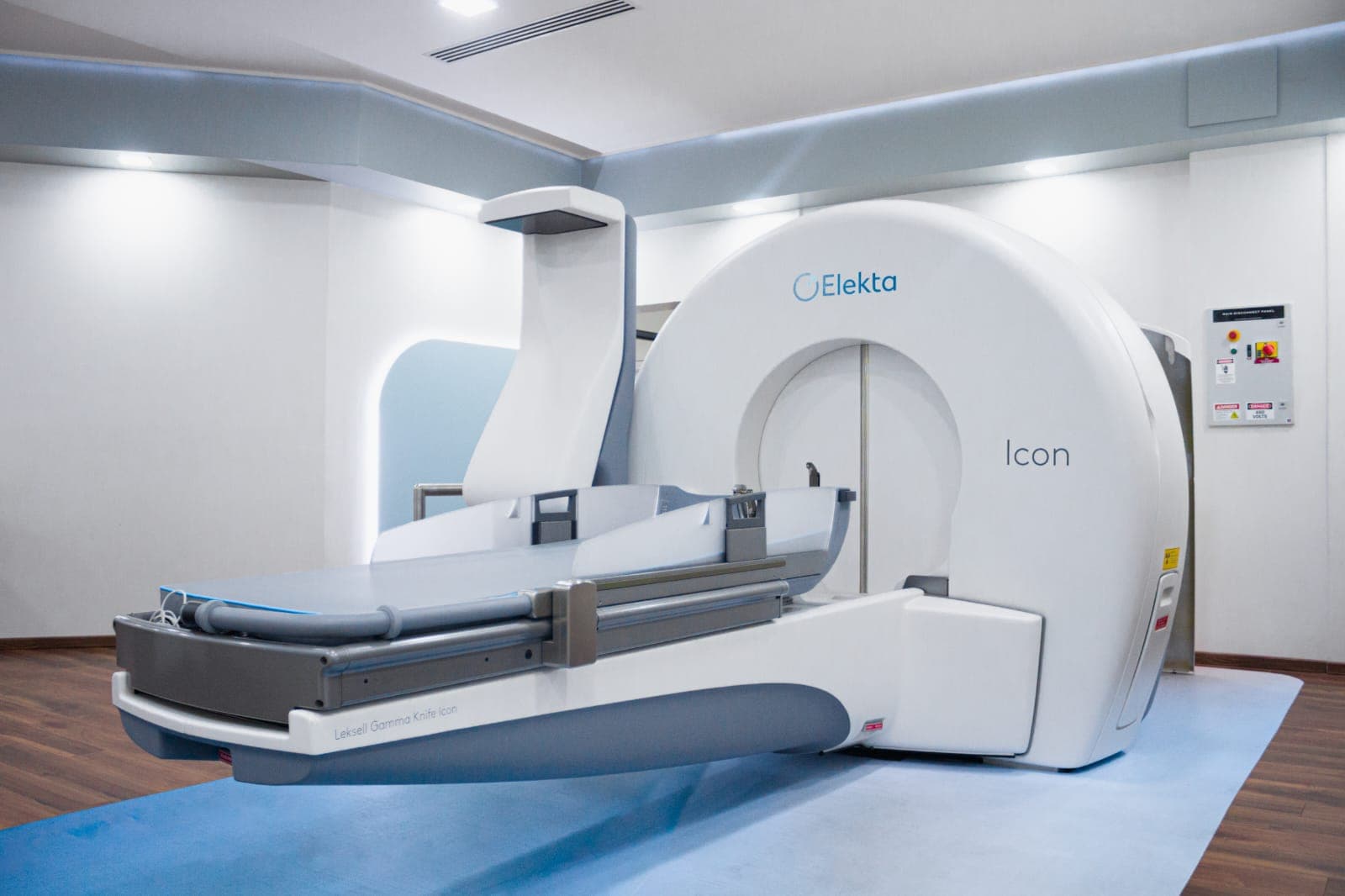
Practicing medicine in a developing country such as El Salvador, or anywhere in Central America, demands a great deal of imagination and improvisation. We read the scientific articles published in the world’s strongest economies and set out to achieve the same results, often without the same resources. There, improvisation is unnecessary because everything is available. Here, it is often part of daily life.
I have sometimes called this the Dollar City mindset: making do with what we have, adapting, substituting, finding a way. That ability is admirable, and I am proud of the creativity of our medical teams. But it has a limit, because there are areas of medicine where improvising is not enough.
Bringing the Right Technology to What Seems the Wrong Economy
When we started the Gamma Knife program in El Salvador, and later CyberKnife in Costa Rica, many considered it a contradiction: first-world technology in small economies. Over time we have learned that the challenge was never just bringing in the equipment. The real challenge has been turning these exceptional tools into results capable of transforming a life, a medical practice, a society and, why not, a country.
Why These Two Tools Make a Difference
Precision. Gamma Knife and CyberKnife can concentrate very high doses of radiation on a tumor or lesion with an error margin of fractions of a millimeter, while the surrounding healthy tissue receives very little. For the patient, this means treating lesions in the brain, and with CyberKnife also elsewhere in the body, without an incision, without any form of anesthesia, and often in a single session or very few.
Less burden for the patient. Treatment that once might have required major surgery, days in hospital, and weeks of recovery can now be done as an outpatient procedure. Patients go home the same day and, in many cases, return to normal life soon after.
Protocols on par with the best centers in the world. Both centers are certified by the International Stereotactic Radiosurgery Society (ISRS). This means our treatment protocols, quality controls, and way of working have been evaluated against international standards. A patient treated in San Salvador or San José receives the same level of quality they would receive at a reference center in the United States or Europe.
Knowledge that stays in the region. These programs have trained Central American physicians, medical physicists, and technologists. They have produced scientific publications from the region and placed Central America in the international radiosurgery conversation. Technology arrives in a crate; knowledge is built by people.
The Best or Nothing
That is why I hold a conviction that may sound radical: in high-complexity medicine, we must always pursue the best technology. The best or nothing.
I do not say this out of arrogance or disregard for improvisation. Improvisation can be useful, and at times it has helped us solve difficult situations. But when a patient’s brain, function, quality of life, or survival is at stake, improvisation should not be the strategy. At most, it should be the last resort.
Our patients are not second-class patients because they were born in a small country. They deserve the same results described in the world’s best articles, and to achieve them, they need access to the same tools.
Looking Ahead
The road has not been easy, and it will not be. Bringing cutting-edge technology to our region requires perseverance, investment, training, and above all the conviction that it is worth it. After all these years, my answer remains the same: it is worth it. Having the best technology at the patient’s service will always be the best option.
Dr. Eduardo Lovo
Neurosurgeon and Radiosurgeon